“Urbanism” is not always the right answer.
I struggle with the city and town planning buzzword “urbanism,” mostly because it is poorly
understood by the general public. But I also differ in some respects with the way urbanism is
practiced by its most ardent believers. I’ll grant that the word describes an important part of
what I believe and strive to advocate, including neighborhood characteristics such as walkable
streets, an abundance of transportation options, and more compact neighborhood patterns
than we typically find in sprawling suburban subdivisions. But “urbanism” doesn’t come close
to describing the true, complete picture of what I believe and advocate when it comes to land
use and development.
What I really advocate is green and healthy places, including those in cities, towns, and rural
areas. For me, that can include high-, medium-, or rarely but sometimes even low-density
places, as well as conservation — and refraining from development altogether on certain land
— every bit as much as it frequently includes typically urbanist approaches. I do not believe
that urban intensification is always the right answer in making and sustaining green and healthy
places, although it frequently is, especially when done with contextually sensitive design.
Moreover, I believe that some developed places are, in fact, already dense enough, which
seems blasphemous in the views of many contemporary urbanists.
The social media post that woke me up to the fact that I am not in alignment with some of
today’s more ardent urbanists was this gem in my Twitter/X feed: “In a sane world, San
Francisco would look like Tokyo.” Whoa. I’m sure there are arguments to support that position
in theory; but, to me, they have little to do with the type of “sane world” I prefer, which
includes beauty, humanity, local identity, human scale and, yes, lovability in placemaking. I
know that those are mushy words, difficult to define and even harder to quantify. But that does
not make them unimportant. As architect Steve Mouzon has explained at length, places that
are loved are much more likely to be sustained over time than those that aren’t.
Now, I don’t doubt that Tokyo — the world’s second largest metro area, with 41 million
people, according to Britannica — is a fascinating place loved by many as a city to visit or live in,
but it is a huge change from San Francisco. I certainly wouldn’t substitute it for a beautiful
American city that is on just about everyone’s top-ten list of “most popular” American big cities.
Yes, San Francisco has expensive living costs, as does just about every beautiful and desirable
city, neighborhood, and town. But it remains one of our country’s most-loved cities.
But I suspect that the poster’s real point was likely that we in the US should adopt a much more
libertarian approach to allowing and building dense new urban development, especially
housing, in established cities such as San Francisco. I would agree that, yes, even beautiful San
Francisco could use some of that, built at appropriate scale in appropriate places. (In my
opinion, what is “appropriate” can and should be debated — as painful as that can be — and
should vary according to circumstances.)
But let’s not fool ourselves into thinking that the problem of housing unaffordability in America
can be solved simply by adding more housing supply without also doing more, such as providing
subsidies to those in need. It’s not that simple.
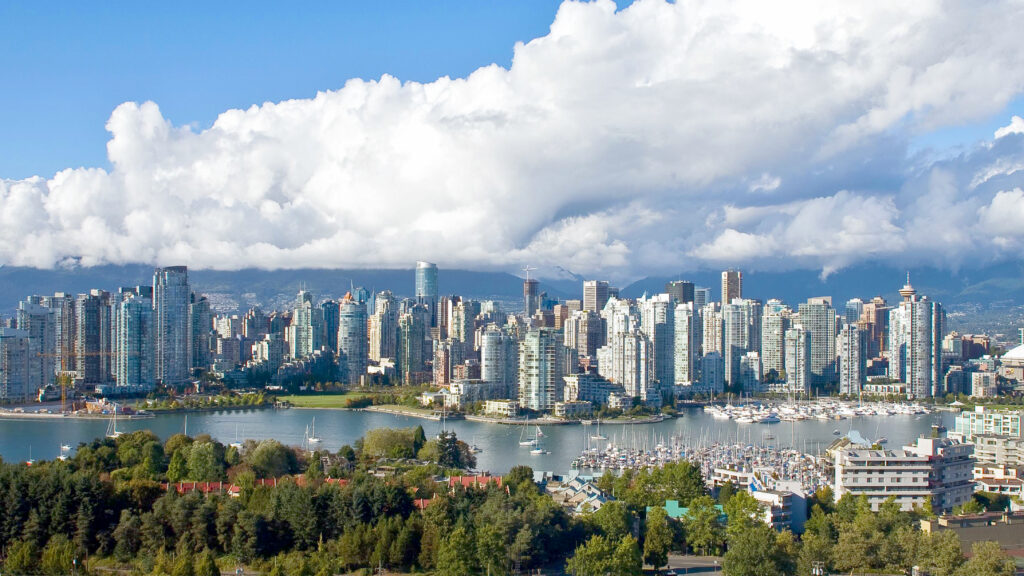
Consider the Canadian example of Vancouver, a city whose skyline is characterized by a
multitude of newish high-rise towers, many of them full of apartments. By some accounts,
Vancouver has added more housing than any other city in North America, tripling its total
number of housing units since the 1970s. Nevertheless, it remains one of the continent’s most
expensive cities.
That said, I’m in general agreement with a more permissive approach to urban development in
certain places. For example, I am a huge fan of “retrofitting” worn-out suburban strip malls,
deserted big-box parking lots, and the like into walkable, mixed-use places that can then
support good transit service. Among those who have written fantastic books on this subject —
with lots of examples — are Professors Ellen Dunham-Jones and June Williamson (see here),
urban planner Jason Beske with my architect friend and downtown champion David Dixon
(see here), and architect and urban planner Galina Tachieva (see here).

I also strongly support conversion of now-underutilized office buildings to residential
apartments; appropriately scaled development on vacant city lots; and the addition of
accessory development units (typically small apartments associated with a larger house) and
duplexes even in established neighborhoods that are now single-family. I certainly applaud
sensitive, respectful restoration of badly disinvested city districts such as Old North Saint Louis
in Missouri, which tragically lost some ninety percent of its population in the late twentieth
century but is now beginning to come back.
Sometimes YIMBY, sometimes not
I like to think of myself as sometimes YIMBY (Yes in My Backyard), but sometimes not,
depending on the situation. I have supported all sorts of development in and around my own
neighborhood, which hosts two large new developments that bring close to 1,500 new
apartments on a street only two blocks from my home. One of them — the larger of the two —
is fantastic in my opinion, having earned a LEED-ND (LEED for Neighborhood Development) gold
certification for its plan. There are several hundred additional new apartments being constructed within easy walking distance. My only significant disappointment with these new
developments is that they will contain very little affordable housing.
(City-wide, Washington has added 36,000 new homes to its inventory since 2019, almost as
much as it added in the previous 18 years. That in itself is impressive, but I wish more of them
were subsidized to be affordable.)
I like these new projects near my home, but I do not advocate dense new urban development
blindly. As I keep up with current goings-on in the world of community-making, I read social
media posts and other writing by more aggressive urbanist advocates who seem to take a sort
of “build, baby, build” approach to dense new development. Some of them disdain all zoning,
or so it seems, because it can get in the way of some types of new development, including new
housing that they believe would help alleviate a continuing shortage. I prefer to reform zoning
to be more permissible in mixing building uses and encouraging more residential units,
including affordable ones, in more neighborhoods. But I also prefer that we do so incrementally
in most places.
Many of today’s urbanist advocates also dislike and sometimes campaign against historic
preservation, again because it restricts the building of some ambitious projects in designated
historic places. I couldn’t disagree more. To me, the conservation of our historic legacy is critical
to important human values. We have plenty of places to build without trampling on these
special places, including the sites I mentioned above. I will grant that some NIMBY (Not in My
Backyard) opponents of development grotesquely misappropriate historic preservation
arguments in their anti-development advocacy, and it’s maddening when they do. Fake
“environmentalists of convenience” have been known to do the same thing. In both cases, they
should be called out for that; real environmentalists and preservationists should speak out
when such opponents are wrong and say so, as I have done many times.
And there are fewer urbanist advocates than I wish who argue for integrating city nature (other
than perhaps street trees) into urban development, despite the overwhelming evidence of its
importance to human and environmental health. It’s a big deal to me and, if it sometimes
means setting aside urban parcels for nature rather than development, so be it.
It is also a big deal to me to avoid so called “leapfrog” sprawl that bypasses the outer limits of
current city and town development to jump over undeveloped land and to place intense new
development on what is now farmland or forests. Even if done well, to me that’s just — at best
— a prettier, more orderly form of suburban sprawl that almost always generates more driving,
more conventional suburban sprawl nearby, and the disruption of existing watersheds and
ecosystems. That definitely separates me from some urbanists and other architects, planners, and developers who do great work when concentrating on sites closer to and within existing
cities and towns but stray too often for my taste on currently untrampled land.
Where possible, I prefer to see rural and wild lands preserved, as Montgomery County,
Maryland (photo above) and Lancaster County, Pennsylvania have done with stellar farmland
conservation programs; as metropolitan Portland, Oregon has done with its urban growth
boundary; and as the province of Ontario has done with a two-million-acre greenbelt around
the cities of Toronto and Hamilton. All of these programs are imperfect, of course, and all must
be maintained and defended constantly over time. But all have also been successful in reducing
suburban sprawl and maintaining important natural resources. These kinds of efforts are very
important to my personal view of city and town development, but they are not considered part
of “urbanism” by anyone.
If not urbanism, what is it?
I’ll conclude with a bit about a question I am often asked when I discuss the vocabulary of
“good development” informally with friends in the field: “well, if not ‘urbanism’ and not ‘smart
growth,’ what exactly do you call it?” Personally, I’m not sure we need an all-encompassing
term at all. I don’t need an “ism” to describe approaches to development that I prefer.
Instead, I just say that I work to create and sustain greener, healthier communities. That
includes some environmental elements, some urban development principles, and some social
and cultural elements, among others. But, if you’re looking for across-the-board consistency,
you may have come to the wrong place. The right combination of those elements, and others,
can vary substantially from place to place and situation to situation. Let’s try to be greener and
healthier in our approach to development and conservation, and let the outcomes and
descriptions vary with the circumstances.
– Excerpted and adapted from the essay “A very personal take: I’m struggling with the word
“urbanism,” and here’s why” on Medium